What is Time Management?
Before we delve deeper into the concept, we will first define Time Management. Time Management is the process of planning, organising, and prioritising tasks and activities to make the best use of your time. It involves setting goals, creating schedules, and making conscious choices about how to allocate your time to various tasks and responsibilities. Effective Time Management, as highlighted in the Time Management Skills Guide, helps you accomplish more in less time, while reducing stress and improving your overall quality of life. Recognising the Benefits of Time Management boosts organisation, productivity, and wo
Key Components of Time Management
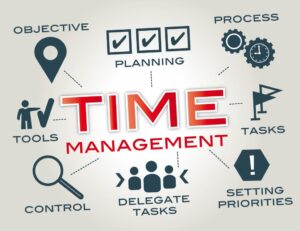
Now that we know the definition of Time Management, we will explore its basics. This section of the blog will expand on the core components of Time Management.
rk-life balance.
1) Setting Goals
Setting clear and measurable goals gives your tasks direction and purpose. Specific, time-bound objectives help you focus on priorities and track progress effectively, ensuring each activity contributes to your larger aims.
2) Prioritisation
Prioritisation helps identify which tasks matter most. Using tools like the Eisenhower Matrix, you can categorise tasks by urgency and importance to focus on high-impact activities and manage time wisely.
Ready to take your time and use it effectively, refer to our blog on Time Management Books.
3) Creating a Schedule
A structured schedule ensures you allocate time efficiently across important tasks. Include buffer time for delays and keep your plan realistic, balancing productivity with flexibility throughout your day.
4) Time Tracking
Tracking how you spend your time reveals habits and inefficiencies. By reviewing time data or using tracking tools, you can align daily activities with goals and continuously improve time
Benefits of Time Management
Effective time management improves productivity, focus, and overall workplace harmony. It ensures that time is used wisely, leading to better performance, reduced stress, and higher satisfaction among employees and teams.
a) Happier employees: Proper time allocation reduces stress and burnout, improving overall job satisfaction.
b) Improved creativity: A balanced schedule allows employees to think clearly and produce innovative ideas.
c) Lower absenteeism: Reduced stress leads to fewer sick days and time off.
d) Higher retention: Employees with manageable workloads are more likely to stay longer in their roles.
e) Increased productivity: Efficient time use helps teams focus on key priorities and deliver better results.
f) Enhanced reputation: Organisations promoting time management are viewed as supportive and productive workplaces.
management practices.
Challenges of Time Management
Time management challenges can be divided into two main categories: internal barriers and external barriers. Understanding these helps individuals identify what affects their productivity and how to overcome it.
Internal Barriers:
a) Lack of self-control: Distractions and impulsive actions reduce focus and goal achievement.
b) Procrastination: Delaying tasks leads to stress and reactive decision-making.
c) Lack of motivation: Without clear purpose, individuals struggle to prioritise effectively.
d) Anxiety: Stress impacts concentration and productivity.
e) People pleasing: Trying to satisfy everyone spreads efforts too thin.
f) Multitasking: Handling too ma
Challenges of Time Management
Time management challenges can be divided into two main categories: internal barriers and external barriers. Understanding these helps individuals identify what affects their productivity and how to overcome it.
Internal Barriers:
a) Lack of self-control: Distractions and impulsive actions reduce focus and goal achievement.
b) Procrastination: Delaying tasks leads to stress and reactive decision-making.
c) Lack of motivation: Without clear purpose, individuals struggle to prioritise effectively.
d) Anxiety: Stress impacts concentration and productivity.
e) People pleasing: Trying to satisfy everyone spreads efforts too thin.
f) Multitasking: Handling too many tasks at once decreases efficiency and accuracy.
ny tasks at once decreases
Time Management Techniques
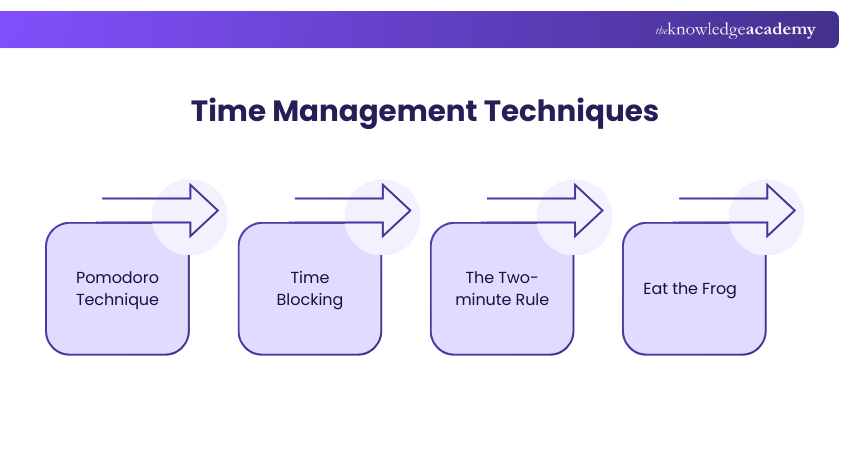
This section of the blog will expand on some commonly used Time Management Techniques.
efficiency and accuracy.
1) Pomodoro Technique
The Pomodoro Technique promotes focused work through short, timed sessions. You work intensely for 25 minutes, followed by a 5-minute break. After four sessions, take a longer rest of 15–30 minutes. This cycle helps sustain attention, reduce fatigue, and improve productivity by balancing focus and relaxation.
2) Time Blocking
Time blocking divides your day into dedicated segments for specific tasks or activities. Assign high-priority work during your most productive hours, and include breaks to avoid burnout. This method helps prevent task overlap, encourages discipline, and ensures consistent progress toward goals.
3) The Two-Minute Rule
The Two-Minute Rule encourages completing quick tasks immediately if they take two minutes or less. This approach clears small tasks before they pile up, keeps your to-do list manageable, and promotes a proactive mindset
4) Eat the Frog
“Eat the Frog” means tackling your toughest or most important task first. By completing it early in the day, you gain momentum and motivation for the rest of your work. It reduces stress, boosts confidence, and ensures your highest-priority goals are met.
Boost Your Interview Preparation – Check out these top Time Management Interview Questions to impress your interviewer.
Tips for Successful Time Management
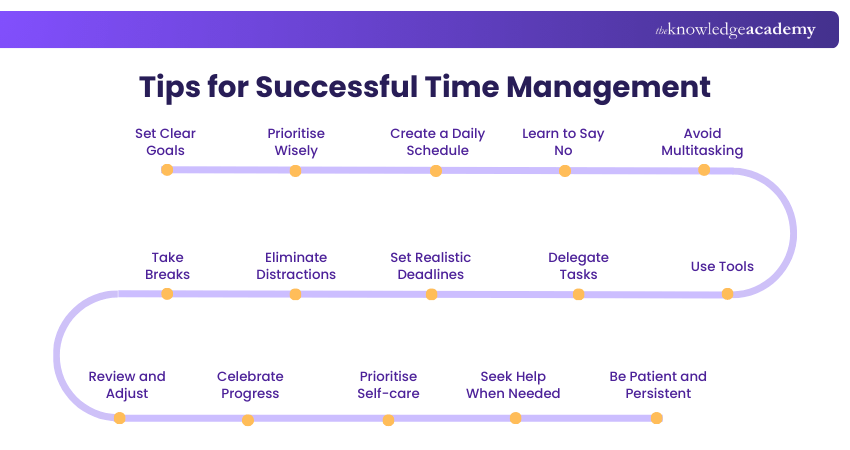
Effective Time Management is necessary for achieving goals and maintaining balance in life. By understanding Time Management Theories and applying practical tips, you can optimise how you allocate your time. Here are some tips to help you master this skill:
that combats procrastination effectively.